What the two documents are
Grant’s direction (2026-09-29): these documents are the basis of the knowledge base. The heat-map and spectrum images are pedagogical figures only — see Figures. They are not a top-level category.
| Document | Scope | Corpus |
|---|---|---|
| Condensed KB (PDF, 6 pp.) | Dialogue synthesis, June–August 2026. Sections 1–9: introduction, core objects, seven theorems, lambda sketch, linguistic mappings, historical resonance, CS implications, a note on fringe patents, synthesis. No Part VI expansion. | lit/grant-seed/topological-formal-semantics-kb.pdf |
| Takeaway (docx) | Same core, then Parts VI–VIII: heat-map strata, reorderable units, non-Abelian holonomy, sheaf / operad / anyon / MTC / 2-group language, and open problems. Subtitle: “From Hybrid Ribbon to Hermetic Triple Integration, and Beyond.” | lit/grant-seed/topological-formal-semantics-takeaway.docx |
Both call the framework Topological Formal Semantics: linguistic structure, geometric form, and event structure treated as projections of one non-orientable, hierarchical object. That is the documents’ thesis. It is not a settled result of this desk, and it is not a joint field with Syntax or Math until Grant and the Chief of Staff say so.
Contents
- Heat maps as substrate
- Reorderable units and operator
- Non-Abelian holonomy
- Sheaf, operad, anyons, MTC, 2-groups
- Synthesis — meaning as holonomy
- Open problems
Core glyph
The fundamental hierarchical operator is the triangled squared circle: outer circle containing an upward triangle, containing a square, containing an inner circle. The takeaway calls this an ancient Hermetic emblem used as a modern formal operator. Nesting as written: outer circle ⊃ triangle ⊃ square ⊃ inner circle.
| Layer | Element (as synthesized in the docs) | Reading given in the docs |
|---|---|---|
| Outer circle | Macrocosm · Air | Cosmos, spirit, higher consciousness, CP-level closure |
| Triangle | Fire | Transformation; dynamic operator identified with vP / little v |
| Square | Earth | Stability, material realm, body, lexical-thematic domain |
| Inner circle | Water | Fluidity, mind, microcosm, core argument or theme |
The takeaway’s embedded “diagrams” of this glyph are ASCII sketches with broken formula images. They are archived under lit/grant-seed/media/ and are not republished here.
Hybrid square-circle Möbius ribbon
A single continuous ribbon whose centerline is piecewise straight segments and circular arcs, closed under an odd number of half-twists. The documents state that the surface is non-orientable, has one boundary component, has Euler characteristic χ = 0, and is homeomorphic to the standard Möbius strip. Straight segments are read as “square,” arcs as “circle,” one band.
Nested Platonic solids and Kepler
Element assignment, as both documents give it: tetrahedron Fire, cube Earth, octahedron Air, icosahedron Water, dodecahedron Cosmos / Aether. Nesting is said to run by dual pairs and the triangular decompositions of the Timaeus.
Kepler’s Mysterium Cosmographicum (1596) is cited as ordering those solids between planetary spheres. The PDF lists the order it is using: octahedron (Mercury–Venus), icosahedron (Venus–Earth), dodecahedron (Earth–Mars), tetrahedron (Mars–Jupiter), cube (Jupiter–Saturn). The takeaway is shorter on that list (“octahedron (Mercury–Venus), icosahedron, etc.”). In the framework this nesting is called a cosmological-scale projection of the same operator — a reading, not a historical claim that Kepler intended the linguistic mapping.
Brunnian / Borromean links
Multi-component links in which no proper subset is linked, yet the whole is inseparable. Recursive versions are said to model unbounded embedding: remove any one “ring” (a projection or a solid) and global coherence unravels. That is the documents’ picture of interdependence among projection levels.
Seven condensed theorems
- Existence of the hybrid Möbius ribbon. A non-orientable surface M, homeomorphic to the Möbius strip, as a finite-width ribbon around a closed immersed curve γ of straight segments and circular arcs. The PDF adds that an orthogonal projection shows square-like and circle-like features in one band.
- Topological invariance. Any such ribbon with an odd number of half-twists is homeomorphic to the standard Möbius strip (χ = 0, one boundary, non-orientable), independent of the exact centerline.
- Brunnian homomorphism for nested linguistic signals. Nested λ-terms for X-bar structures embed faithfully into recursive Brunnian links so that the mereological homomorphism of the incremental theme (Dowty / Krifka) is preserved.
- Hybrid Borromean–Möbius ribbon projection. A multi-component Brunnian link whose components are hybrid Möbius ribbons; projection yields X-bar-like hierarchies and nested Borromean pictures while keeping non-orientability and Brunnian interdependence.
- Aspectual prediction via twist parity. Telic predicates ↔ odd twist (non-orientable); atelic ↔ even twist (orientable). The PDF says this predicts Dowty-style diagnostics: homomorphism reaches a natural culmination precisely when twist parity is odd.
- Glyph / Platonic nesting projection. A non-orientable Brunnian surface projects to the core glyph, read as a three-level X-bar structure whose triangle is the dynamic vP operator; said to extend to full Platonic nesting and Keplerian order.
- Recursive closure under circling. The glyph (and the Platonic operator) may take its own output as a new argument. Offered as a model of unbounded syntactic embedding.
Lambda calculus and integral formalism
Both documents say the constructions admit a λ-abstraction. The takeaway writes the fundamental operator as Twist(C, S) = λC. λS. twist(C, S), and says this is isomorphic to a double integral of a kernel over a Möbius-identified parameter domain. Higher nesting (triangled version, Platonic solids) is said to correspond to higher-arity operators and higher-order integrals. A schematic “Platonize” operator nests framed hybrid ribbons across the five solids.
The PDF’s integral signs did not survive typesetting (black-square glyphs stand in for operators). The takeaway’s formula images are blank placeholders. No formula on this page has been re-derived. The prose claim is all that is stable: a double abstraction / double integral is what the documents intend, with domain identifications meant to enforce non-orientability.
Linguistic mappings
X-bar as nested topology
X-bar trees are called 2-D shadows of 3-D+ Brunnian / Möbius structures. Nested λ-abstractions mirror recursive embedding. The clausal spine is one complete hierarchical Phrase.
VP-internal subject and the dynamic operator
Under the VP-internal subject hypothesis, the subject originates inside vP. The documents identify the triangle with vP / little v: it introduces the external argument, verbalizes the root, initiates event structure, and launches subject raising. Bare V supplies lexical content. T is higher mediation (tense, EPP landing site, interface to the outer circle).
Incremental theme (Dowty 1991)
An incremental theme’s part-structure stands in a structure-preserving homomorphism to the event’s part-structure. In the ribbon model the centerline is the theme and traversal is the event. Local progress is said to map to global aspect via twist parity. Diagnostics given in both documents: “Mary ate the apple” (strong homomorphism, telic) versus “Mary pushed the cart” (weak or absent homomorphism, atelic).
Aspectual composition
Odd twist → non-orientable → natural culmination (telic). Even twist → orientable → homogeneous continuation (atelic). Multiple layers are said to allow multi-level composition.
Historical and symbolic resonance
Plato’s Timaeus. The Demiurge orders the Receptacle with two fundamental right triangles, assembling the four elemental solids; the dodecahedron is reserved for the cosmos. Fire, air, and water can transmute because they share triangular faces. The documents treat this as a hierarchical geometric chemistry.
Kepler. Nested solids between planetary spheres, read here as the same nesting operator at cosmological scale (see above). The takeaway explicitly calls that nesting “a projection of the recursive Brunnian hierarchy” — a framework reading.
Hermes Trismegistus. Traditional glosses of “thrice-greatest” (three parts of wisdom; priest / philosopher / king; intensification of “great”) are acknowledged. The synthesis then reads “thrice” as the glyph’s triple integration: outer circle – triangle – square / inner circle. “As above, so below” is called the linguistic and topological correspondence of macrocosm and microcosm. The takeaway: “The symbol itself is the Message.”
Implications for computer science
- Type systems. Types as hybrid ribbons or nested solids; twist parity for telicity / termination; Brunnian constraints for multi-component resources.
- Concurrency. Brunnian primitives: no pairwise dependency, global inseparability — suggested models for lock-free or capability systems.
- Parsing. Mereological homomorphism as a geometric account of online parsing; twist parity said to predict completion points.
- Verification. Linking numbers, twist parity, and surface invariants as program properties.
- Visualization. Nested solids and ribbon projections for dependency graphs, ASTs, execution traces.
- Higher-order and dependent types. Platonic nesting as a picture of phased or graded type systems.
Fringe physics patents
Heat maps as semantic substrate
The takeaway defines a heat map as a scalar field φ: M → ℝ. Strata (level sets) are properties or zones of intensity. They are not passive: they are arguments that can be fed to operators. Regions may be classed circle-like, triangle-like, or square-like from local topology.
That is the formalization-lane sentence this project can point at without inventing further structure. The pedagogical heat map under Figures shows an intensive field with no coordinate grid. It is Grant’s seed image, not a figure extracted from the docx. Using it to illustrate “intensity without a prior metric” is pedagogy. Identifying its blobs with C / T / S strata would be a further claim — not made here.
Reorderable units and the operator
Circle (C), Triangle (T), and Square (S) are not fixed in nesting order. The set of embeddings is said to be isomorphic to the permutations of {C, T, S}, that is S₃, and to generate higher-order permutations recursively.
The ordering is called operator math in the style of a verb with arguments under the VP-internal subject hypothesis. Triangle (vP) is the dynamic operator; Circle and Square are arguments. Two examples the takeaway writes down:
- 𝒪(C, T, S) — macrocosm as specifier, vP as head, square as complement → telic (odd twist).
- 𝒪(S, T, C) — square as specifier, vP as head, circle as complement → atelic (even twist).
Twist parity = permutation sign. Aspect is the parity of the permutation that takes a canonical order to the actual order. Reported as the document’s rule. Not checked, not locked.
Non-Abelian holonomy
Traversing the hybrid Möbius ribbon meets heat-map strata in an order. Holonomy is the accumulated transformation of the semantic representation. Because the ribbon is non-orientable (odd twist), the holonomy is said to be non-Abelian: the order of strata changes the final interpretation. The document’s dictionary: heat-map strata = local sections; operator 𝒪 = the connection; nesting = the holonomy group.
Further formalisms in Part VI
- Sheaf (§7.5). A stratification sheaf ℱ assigns symbols {C, T, S} to connected components of open sets. 𝒪 is a sheaf morphism into nested structures. The takeaway writes telic ⟺ H¹(M, ℱ) ≠ 0 and atelic ⟺ H¹ = 0. Part VIII then lists “classify all heat-map stratifications by cohomology” as open.
- Operad (§7.6). Nestings form an operad; composition substitutes a nest into an argument slot. The document glosses Merge as binary composition, Move as symmetric-group action, Agree as twist-parity matching.
- Anyons and braids (§7.7). Strata are called anyons; 𝒪 is braiding; a braid-group element acts by a unitary on a state. Twist parity is called topological charge (odd = non-Abelian, even = Abelian).
- Modular tensor category and TQFT (§7.8). Simple objects C, T, S. Fusion rules are written C ⊗ T = S, T ⊗ S = C, S ⊗ C = T. A modular S-matrix is written with a cube root of unity. A TQFT is invoked in one sentence (vector spaces on surfaces, linear maps on cobordisms). Asserted, not calculated here.
- 2-groups (§7.9). Objects C, T, S; 1-morphisms the operator; 2-morphisms holonomy between orderings. Described as a crossed module ∂: H → G with G = S₃ and H = ℤ₃, plus a 2-holonomy around a surface. The document says meaning is gauge-dependent under 2-gauge transformations: reorderings and parity shifts can yield equivalent interpretations.
Synthesis — meaning as holonomy
The takeaway’s table of levels (digest):
| Level | Structure named | Linguistic gloss in the doc |
|---|---|---|
| 0 | Heat map φ: M → ℝ | Semantic field |
| 1 | Stratification sheaf | Symbols C, T, S |
| 2 | Operator 𝒪 | vP / little v |
| 3 | Operad | X-bar trees |
| 4 | Braid group | Ordering |
| 5 | Modular tensor category | Semantic algebra |
| 6 | 2-group | “Gauge theory of meaning” |
Core sentence of Part VII, as the document puts it: meaning is the non-Abelian holonomy of a higher gauge connection on the stratification sheaf of a heat map. The PDF’s closing synthesis, which does not use that sentence, still converges on the triangled squared circle as a triple-integration operator — one Phrase whose dynamic core is the vP triangle; a non-orientable Brunnian hierarchy; incremental-theme homomorphism modulated by twist parity; the Hermetic “thrice-great” message. Both end on “as above, so below,” and both say the framework stays open to further formalization.
Open problems
The document itself lists these as open: cohomological classification and the moduli of interpretations; homotopy of the glyph operad; a physical anyon experiment; explicit 2-gauge laws and conserved currents; a compiler from syntax to braids; whether a semantic heat equation exists; empirical extraction of strata from “natural language heat maps” to predict aspect; n-categories for n > 2.
Consciousness is in that list in the source’s words: if meaning is holonomy, consciousness may be a topological property of the brain’s heat map — “speculative but worth exploring.” Flagged there; flagged here. Not adopted.
§9.3 asks, as cosmology, whether the universe is a heat map and 𝒪 a fundamental interaction. That is a question in the document, not a claim this site repeats as fact.
Takeaway §9.2 (linguistics) restates three implications already sketched above: twist parity as a group-theoretic account of telicity; operad composition as unbounded Merge; semantic holonomy as meaning. Still provisional.
Figures
These two Grant-seed images stay on the site because they teach a regime of occupation: intensity without a surveying frame, and a continuum cut into named measures. They are not plates from the PDF or the takeaway. They do not define smooth and striated — ATP ch. 14 does. The old Pedagogy URL still resolves, for bookmarks, and points here.
Figure · pedagogical · smooth shorthand
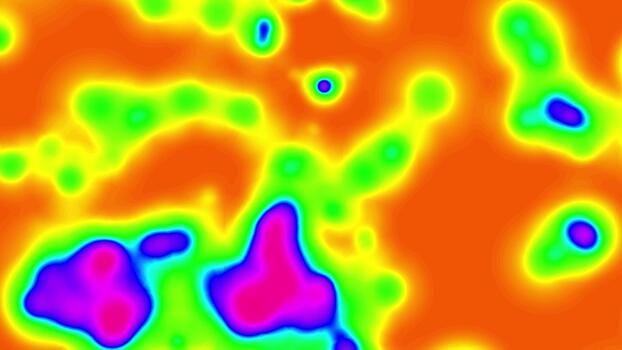
Figure · pedagogical · continuum beside measure
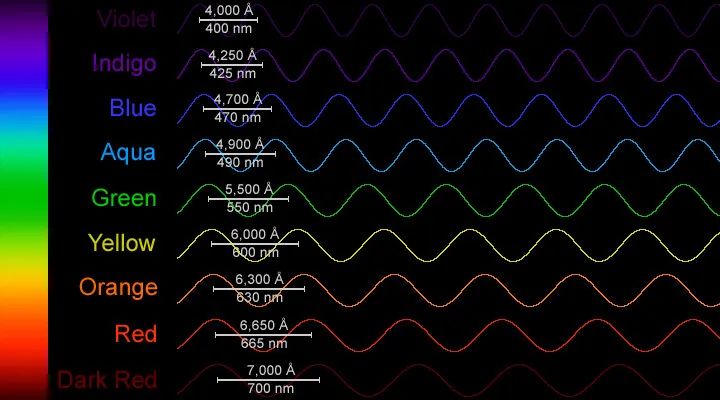
Corpus copies: lit/grant-seed/heatmap-smooth.jpg, lit/grant-seed/spectrum-smooth-striated.jpg. Daily reports that discuss the figures as worked examples remain under Reports.